
Alternative Marine Fuel Spills: What Ship and Crew Managers Should Prepare For
In brief: The IMO Research and Development Forum on 21–22 September 2026 in Singapore will examine gaps in responding to spills involving LNG, LPG, methanol, ammonia, hydrogen and bio or synthetic fuels. Ship managers should review fuel-specific hazards, crew competencies, communications, medical support and movement plans before these fuels scale across fleets.
Alternative fuels are essential to shipping’s decarbonisation, but they do not share one common risk profile. Ammonia is toxic, methanol and hydrogen are highly flammable, and cryogenic fuels introduce temperature-related hazards. A response plan written around conventional oil cannot simply be reused.
The IMO R&D Forum on marine pollution preparedness will be held at Suntec Singapore in partnership with Singapore and China. It is designed to move from high-level environmental commitments towards practical response capability, immediately before SpillAsia 2026.
Why are alternative-fuel spills different?
Traditional oil-spill response often focuses on containment and recovery. Some alternative fuels can evaporate, disperse, ignite, create toxic vapours or behave differently in water. The safe exclusion area, protective equipment, monitoring instruments and medical response may therefore vary by fuel and weather conditions.
1. Risk assessments must be fuel-specific
Operators should identify credible leak and spill scenarios during bunkering, storage and onboard use. The assessment should cover who may be exposed, how the substance travels, which alarms or detectors are available, and what conditions require evacuation rather than intervention.
Singapore has already started operationalising this transition. Technical Reference 129 on methanol bunkering covers safe handling, transfer, measurement and a framework for crew training and competence.
2. Training should include realistic emergency actions
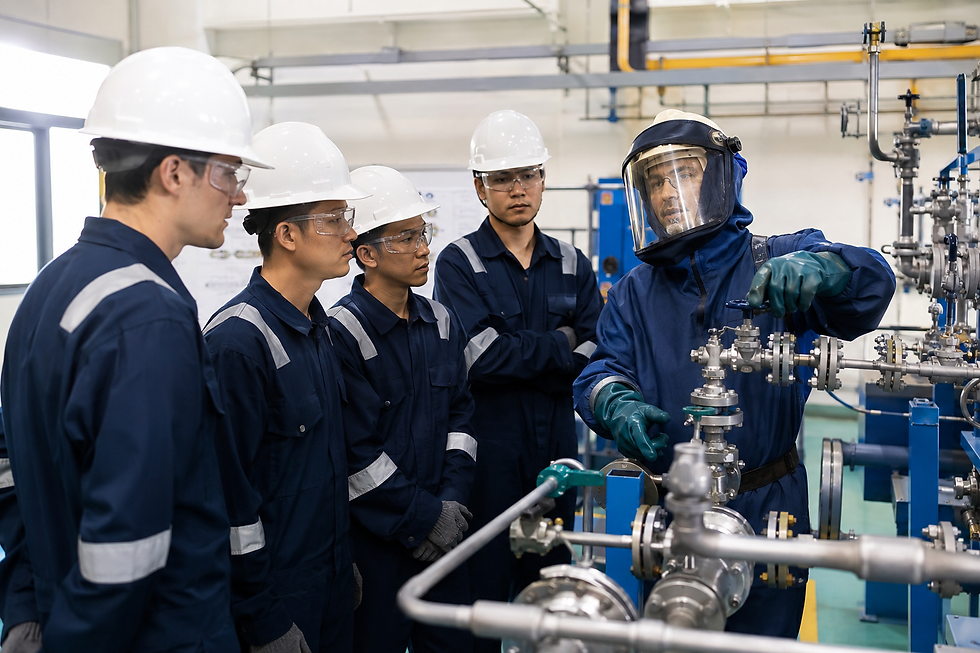
Crews need more than a general introduction to new fuels. They should understand detection, isolation, ventilation, firefighting limitations, first aid, evacuation thresholds and communication with shore responders. Drills should test who makes decisions when information is incomplete.
MPA has said that new fuels require new competencies. Its Marine Energy Training Facility network is intended to train more than 10,000 seafarers and shore-based personnel by the 2030s in safe handling, emergency response and incident management.
3. Shore-side coordination needs clear triggers
An incident may require the vessel, terminal, port authority, emergency services, agent, crewing team and transport provider to act together. Contact lists are useful only when escalation thresholds and responsibilities are clear. Teams should know who stops a transfer, who redirects arriving crew and where affected personnel can receive medical assessment.

4. Crew movement plans must adapt during an incident
Port restrictions, exclusion zones or medical requirements can interrupt crew changes with little notice. A resilient plan should protect people first while maintaining clear communication with those already travelling.
Verify whether a reporting point or launch arrangement has changed
Keep arriving and departing crew away from restricted areas
Provide a safe waiting location when transfers are delayed
Arrange suitable transport without sending drivers into an exclusion zone
Maintain one confirmed coordination channel for the vessel, agent and crew
What should ship managers review now?
Start with the fuels your vessels currently use or are expected to adopt. Compare emergency procedures with actual equipment, training records and port arrangements. Then run a tabletop exercise that includes a crew change or shore technician arriving during the incident. This exposes practical gaps that an onboard drill may miss.
Hui Long Enterprise supports coordinated marine crew transport, port and airport transfers, short-notice movements and marine lounge arrangements in Singapore. Our role is shore logistics, not emergency response, but reliable movement planning becomes especially important when port conditions change.


Comments