
ICCAS 2026 Singapore: What Digital Shipbuilding Means for Ship Operations
In brief: ICCAS 2026 takes place at Suntec Singapore from 14–16 September. The conference focuses on practical uses of artificial intelligence, digital twins, modelling, cybersecurity and autonomous systems across the ship lifecycle. For ship managers, the key issue is not only how vessels are designed, but how new digital systems change maintenance, crewing, training and shore support.
The International Conference on Computer Applications in Shipbuilding returns to Singapore as maritime companies face pressure to improve efficiency, lower emissions and manage increasingly complex vessels. The programme is expected to bring together around 200 delegates, 80 technical presentations and six workshops.
Digital shipbuilding can sound distant from daily crew operations. In practice, decisions made during design determine the interfaces crews use, the maintenance data available to superintendents, the skills required onboard and how quickly shore teams can respond when something goes wrong.
What digital shipbuilding technologies matter most?
1. Digital twins connect design with operations
A digital twin is a data-based representation of a physical vessel or system. When connected to operating data, it can help teams compare expected and actual performance, test maintenance decisions and identify abnormal behaviour earlier. It is most useful when the underlying data is reliable and the people using it understand its limits.

For ship managers, this changes maintenance planning. Engineers may receive earlier alerts, but crews still need time, tools and clear procedures to inspect equipment. Shore teams should define who reviews alerts, who validates them onboard and how an issue is escalated before relying on automated recommendations.
2. AI can assist decisions, but accountability stays human
AI can support route optimisation, fuel analysis, condition monitoring and document review. These tools may reduce repetitive work, but they can also produce incorrect outputs when data is incomplete or operating conditions change. Companies need approval limits, human checks and records showing how important decisions were made.
This is especially relevant for safety-critical tasks. A digital recommendation should support the master, chief engineer or shore manager, not create uncertainty over who is responsible.
3. Cybersecurity now affects vessel availability
More connected equipment creates more paths for operational disruption. Cybersecurity therefore needs to cover access rights, software updates, supplier connections, backup procedures and crew response when systems are unavailable. Training should use realistic scenarios, including loss of communications or incorrect sensor data, rather than policy slides alone.
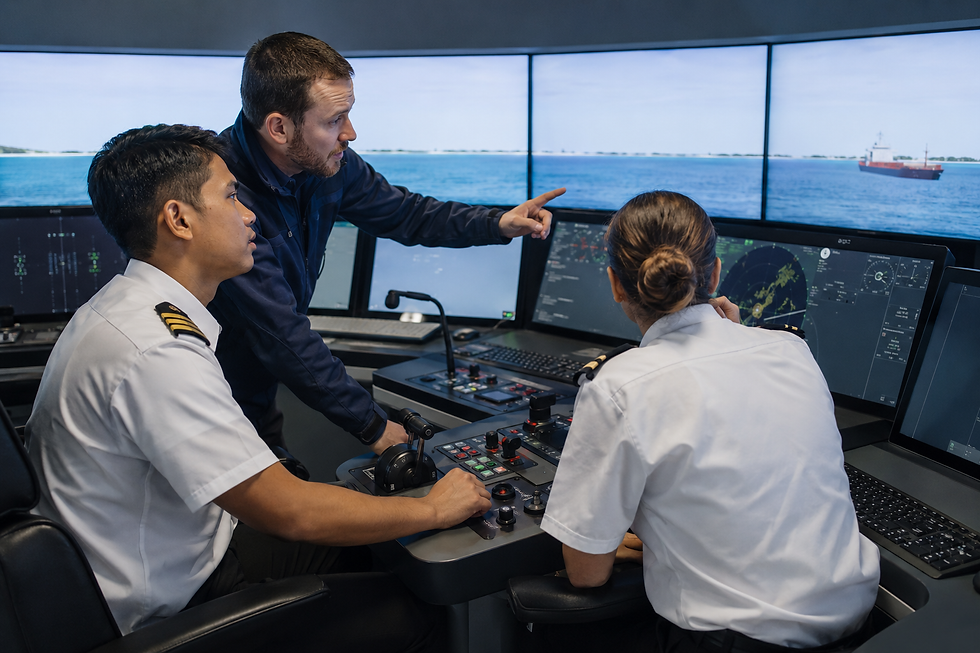
4. New systems change crew competency requirements
A vessel may become more automated without becoming crewless. Instead, roles often shift towards monitoring, troubleshooting and coordinating with shore specialists. Ship managers should map which systems each rank must operate, what failure modes they must recognise and what evidence demonstrates competence.
For Singapore-registered ships, MPA’s crewing guidance requires appropriately qualified and trained personnel for safe operations and environmental protection. Technology planning and workforce planning should therefore move together.
How does this affect crew logistics in Singapore?
More specialised vessels can require particular engineers, technicians or riding squads to reach a ship within narrow windows. Delayed flights, changes in berth timing or missing equipment can become more costly when the required expertise is scarce.
Confirm the exact role, certification and equipment required before travel
Share vessel, berth and reporting details with crew and shore teams
Build time buffers around airport, immigration and launch connections
Prepare a suitable waiting location when schedules move
Keep a named coordinator available for short-notice changes
Hui Long Enterprise supports airport-to-port transport, seafarer transfers, short-notice movements and marine lounge arrangements in Singapore. See our guide to crew change in Singapore for the wider movement process.
Sources: RINA ICCAS 2026 · MPA crewing guidance


Comments